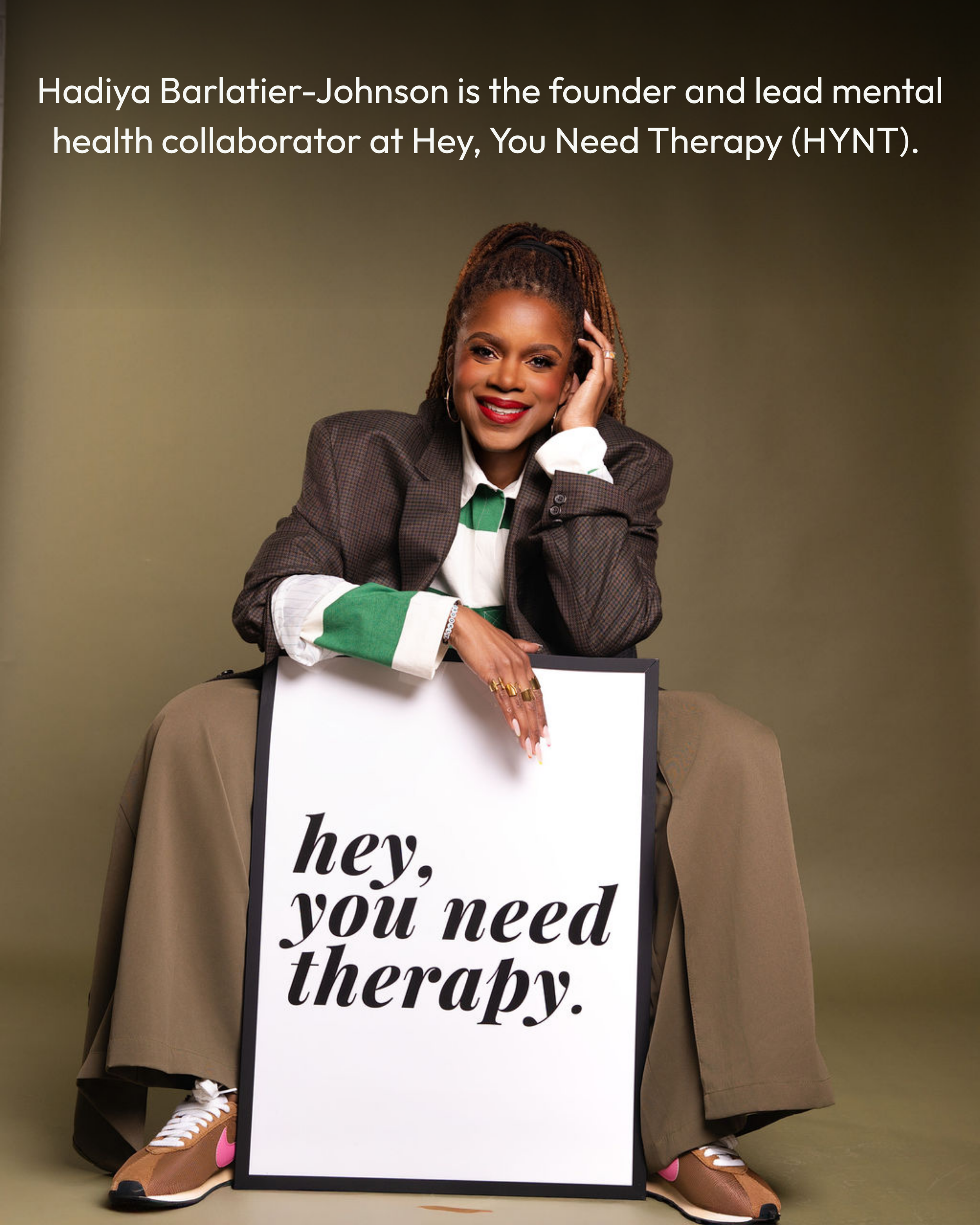
Interview with Hadiya Barlatier-Johnson - BIPOC Mental Health Month
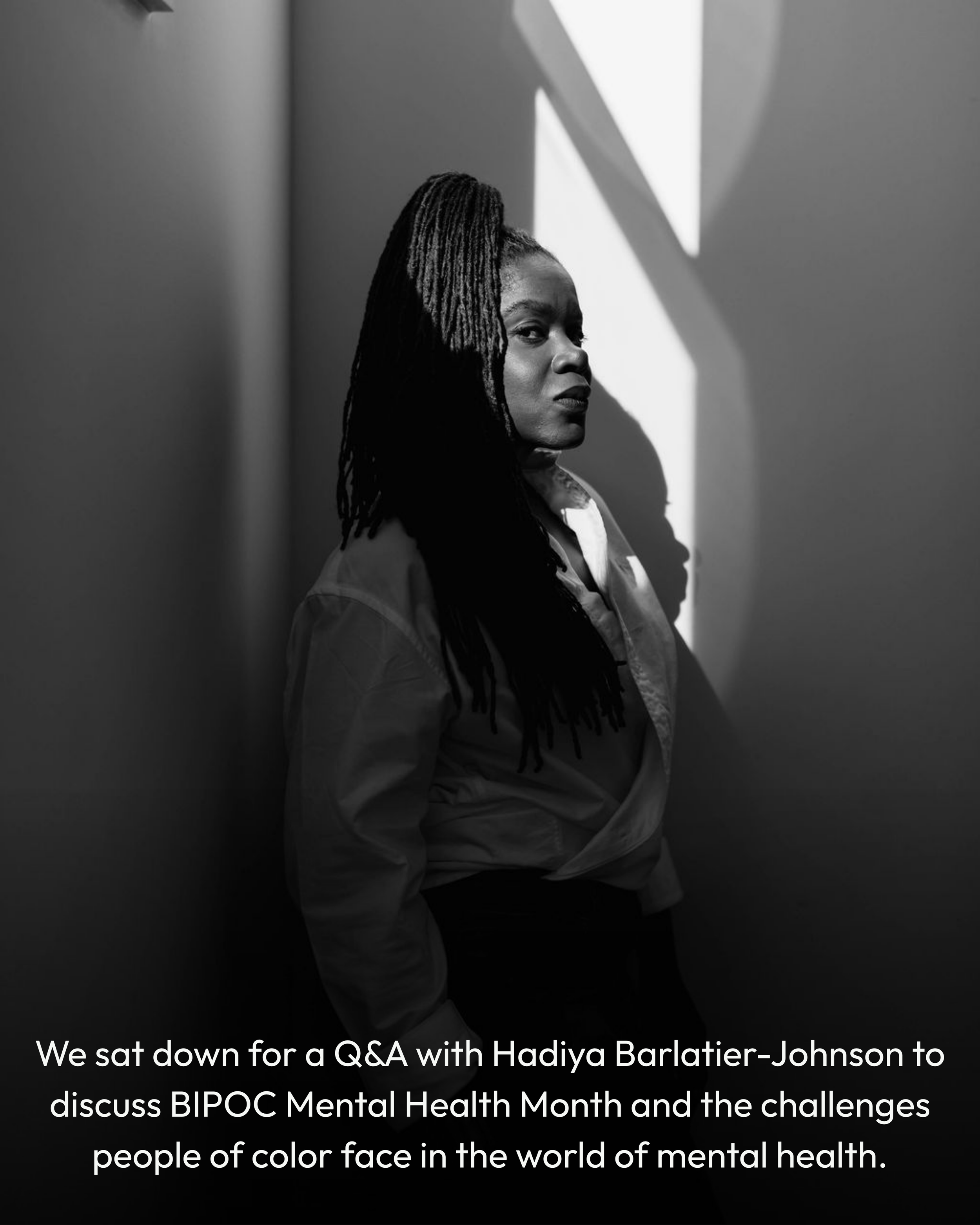
Hadiya Barlatier-Johnson, therapist, founder and lead mental health collaborator at Hey, You Need Therapy.
How do you interpret the collective experience and/or trauma people of color face, and do you feel they are supported and represented completely by the mental health care industry? How so?
Collective trauma, often referred to as racial trauma or race-based traumatic stress (RBTS), is the cumulative psychological and emotional impact of racism and discrimination. It includes direct experiences of racism, vicarious trauma from witnessing racial violence and injustice, and intergenerational trauma carried through historical and systemic oppression. It can show up as chronic stress, hypervigilance, racial battle fatigue, anxiety, burnout, and difficulty trusting systems that have repeatedly caused harm.
Once we understand the impact of racial trauma, it becomes clear how layered this question really is. Mental health does not exist in isolation. Political climates, socioeconomic conditions, access to education, healthcare disparities, generational experiences, community resources, systemic inequities, and cultural identity all influence how people experience and engage with support.
Because these factors are so interconnected, I do not believe people of color are fully represented or completely supported by the mental health industry yet. We have made progress, but representation is about more than increasing numbers. It also requires cultural responsiveness, accessibility, affordability, and environments where people do not feel they have to defend, explain, or minimize their lived experiences.
Clients should not have to translate their culture or educate their therapist to feel understood. People deserve spaces where they feel seen, heard, and valued without constantly having to justify who they are, particularly within systems that were not originally designed with their experiences in mind.
How can we make it better?
There is no single solution because these challenges do not exist in isolation. Mental health is deeply connected to the systems and environments people navigate every day, so improving outcomes requires effort on multiple levels.
We already know that access matters. We need more providers from diverse backgrounds, stronger culturally responsive training, and more opportunities for mental health conversations to exist beyond traditional therapy spaces.
We also have to be willing to examine the systems already in place: who created them, who they were designed for, and who may have been unintentionally left out. Real change requires more than visibility or performative efforts. It requires intentional action and accountability.
It also means creating room for difficult conversations without rushing to soften someone’s reality because it creates discomfort. People have a right to acknowledge when systems still feel oppressive and to question what progress truly looks like. Support becomes more accessible when it feels human, authentic, and connected to people’s lived experiences.
Are there any mental health stigmas you'd like to change that are specific to communities of African-American descent?
I paused on this question because I do not identify as being of African American descent. At the same time, I think the question itself highlights an important nuance. The term African- American does not fully capture the range of Black identities in this country. Many people identify as Afro-Caribbean, African, Afro-Latinx, multiracial, first-generation, or hold identities shaped by different cultural experiences.
One thing I would challenge is the tendency to treat communities as if one experience represents everyone. When identity becomes simplified, our understanding of pain, resilience, help-seeking, and healing can become simplified as well. Culture, language, family systems, and migration histories all influence how people experience stigma and engage with care.
Within mental health settings specifically, it is also important to acknowledge how often Black individuals have historically been viewed through a Eurocentric lens in research, assessments, and systems of care that were not designed with their lived experiences in mind.
That can show up through assumptions about communication styles, body language, appearance, or presentation. Without cultural understanding, those observations can shift from context to misjudgment, increasing the risk of bias, misdiagnosis, and inadequate care.
This is one reason our intake process at Hey, You Need Therapy (HYNT) includes identity and cultural considerations for every client. Understanding someone’s story means understanding their family systems, cultural background, and intergenerational experiences, not simply their symptoms.
Do you have personal experience as a provider or client that brought you comfort or created barriers for you?
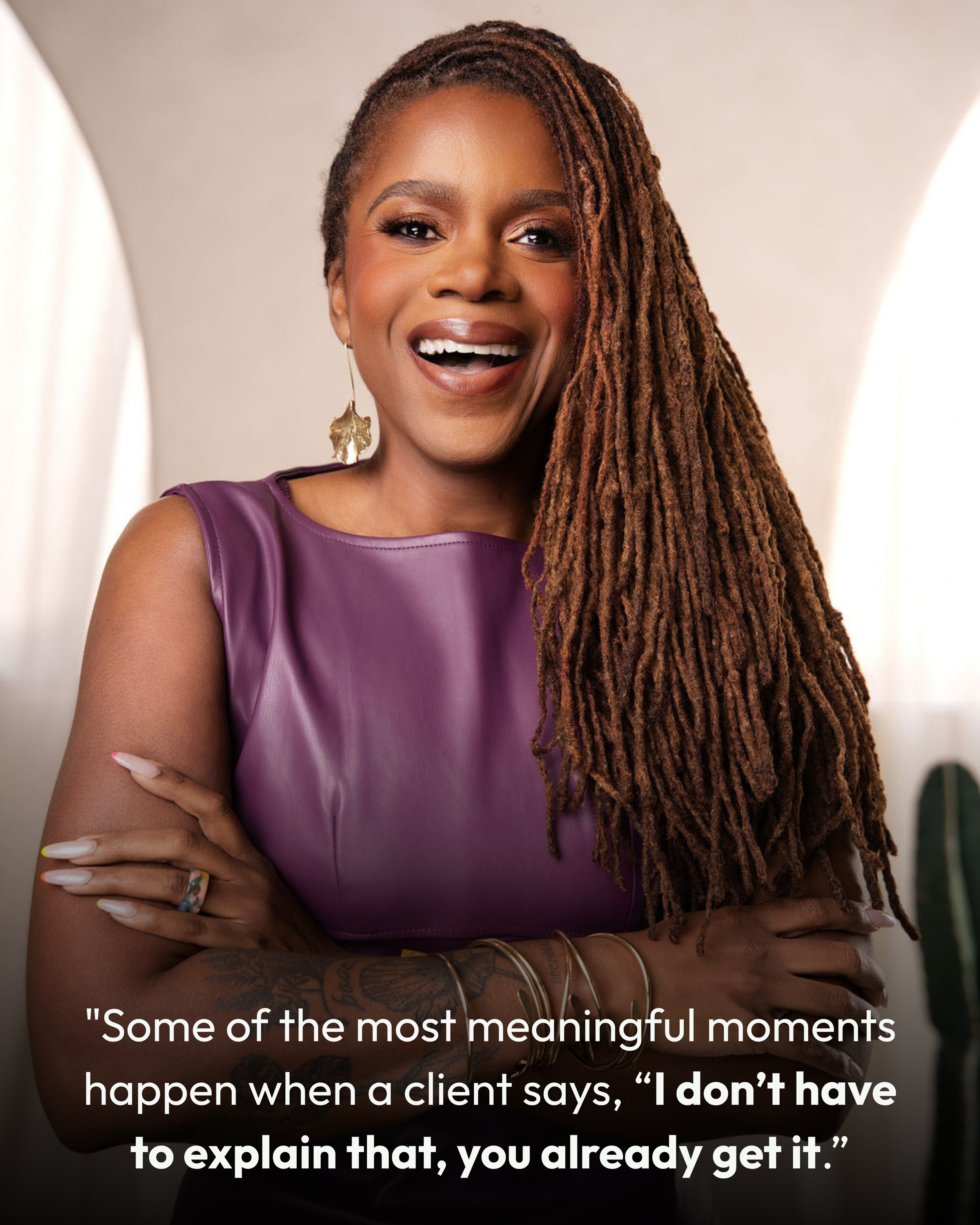
As a provider, I have seen how powerful it can be when clients realize they do not have to code-switch, shrink themselves, or perform being “okay.” Some of the most meaningful moments happen when a client says, “I don’t have to explain that, you already get it.” Cultural understanding removes the burden of translation in the therapeutic space when it can already feel vulnerable to share your story.
I have also seen barriers firsthand. Cost, transportation, scheduling, stigma, and fear of judgment all impact access to care, which is one reason we offer virtual services and encourage flexibility around how support looks.
I often invite clients to come into sessions as they are. If that means folding laundry, taking down their hair, sitting under a blanket, or simply existing in a way that feels comfortable and realistic, that is okay, too. Many of us have been conditioned to believe that rest has to be earned or that caring for ourselves comes after everything else is done.
Even when people recognize they need support, the cost of giving themselves that time can feel overwhelming, not only financially, but emotionally. Sometimes therapy becomes another thing people feel they have to deserve. People should not have to reach complete exhaustion before believing they are worthy of care.
What can we do to reach more folks in the BIPOC communities in Athens?
We start by building relationships before expecting trust. Trust is earned, and people want to feel understood, not simply served.
As someone who is a transplant from Brooklyn, New York, and part of a military family, one of the first things I try to do in a new place is learn the land I now occupy and understand the histories and communities that shaped it. In North Georgia, that also means recognizing the ancestral and traditional lands of the Muscogee (Creek) and Cherokee peoples and understanding how all of us came to settle here.
I think that matters because reaching people begins with listening before assuming we already know what they need. Trust does not happen in isolation. It is shaped by history, migration, displacement, lived experiences, and the systems people have had to navigate across generations.
That kind of understanding also requires recognizing that oppression is not only historical. It continues through everyday experiences and systemic patterns such as microaggressions, unequal access, dismissive treatment, stereotypes, and the pressure many people carry simply to be treated fairly. When those realities are not acknowledged, it becomes difficult to trust that support is truly meant for them.
Outreach also requires collaboration with trusted community spaces such as schools, churches, local organizations, businesses, and community leaders already doing meaningful work. Education and engagement should feel relational and approachable rather than clinical or performative.
At HYNT, the goal is not simply getting people into therapy. The goal is creating spaces where people feel seen, understood, and safe enough to say, “I do not have to carry this alone.”
…
Learn more about Hadiya’s work at HYNT at heyouneedtherapy.com